Thursday, April 11, 2019


Saturday, October 27, 2018

Friday, March 20, 2015
A Tennessee Williams Named John Paul
When Tennessee Williams wrote the story for the 1982 Bharathan movie, Paalangal (Railway Tracks), World War II had already been fought, won and lost but not forgotten, India was on the verge of becoming a free state and the mutilated body of Elizabeth Short, a Hollywood starlet who would later inspire many stories and movies under the name, Black Dahlia, had been found at a lonely Los Angeles courtyard. A Street Car Named Desire, a Pulitzer Prize winning play, originally written for Broadway before the close of the decade, had already been conceptualized on stage by Elia Kazan; it would take another four years for Kazan to bring out the silver screen version. It was in 1951, when Margaret Roberts, the later day Margaret Thatcher, was preparing to lose her first election contest, the movie was released in the USA.
 The story line was simple. A young woman, Blanche, takes a streetcar named "Desire" to arrive at a shanty American town to stay with her sister, Stella, who is married to Stanley, a street character with many rough edges. Stanley is not amused by the arrival of his sister in law and starts bullying her at the slightest of provocations, which, at one time, ends in a rape. Mitch, a friend of Stanley, is enamored by Blanche, and in due course, proposes to her. Stanley intervenes, sabotages the marriage and digs up Blanche's past to find out that she is not mentally stable. The film ends with Blanche taken to the mental asylum where she was once a patient.
A Street Car Named Desire opened to critical acclaim, offering a new experience to the viewer. The main character of Blanche was played by Vivien Leigh, and not Jessica Tandy (we would later fall in love with her in Driving Miss Daisy) who acted the part in the Broadway play as the producers believed Leigh bested Tandy in appeal. Leigh had handled the part for the 1949 London production by Laurence Olivier and was an instant hit there. Kazan carried on with his stage experiments with method acting, a new genre of acting style propounded by Constantin Stanislavski, popularized by Lee Strasberg and followed later by some of the notable Hollywood stars like Marlon Brando, Jack Nicholson, Robert De Niro, Al Pacino and Daniel Day Lewis. Kazan's message was best grasped by Marlon Brando, establishing his Hollywood presence with the movie (his debut was with Men, a Fred Zimmermann film released a year earlier), whose portrayal of Stanley, a down to earth character with negative shades, human frailties and masculine good looks in a custom-made T shirt, was a novel experience for the viewers. Karl Malden (Mitch) and Kim Hunter (Stella) excelled in their roles while Vivien Leigh, with her fragile beauty, appealed to the viewers and won their sympathy; Leigh is said to have been diagnosed with bipolar disorder towards the end of her life and used to mistake herself for Blanche on many occasions. The three won Oscars too, and, quite surprisingly, the one who missed the boat was Brando. The film still holds the record for maximum number of major acting Oscar honours for a film.
 The film had an opening sequence where Leigh alighting a train and slowly appearing from amidst the steam emitting from the engine but the connection the film had with train and railway and tracks ends there. However, this beautiful opening seems to have influenced John Paul and Bharathan to place their offering near a railway station, Shornur Junction to be precise. Passing years transformed the original story and when John Paul modified it for Paalangal three decades later, he left out certain elements alien to Malayali psyche but retained the four major characters and their interactions with each other. The film was shot at and in the periphery of the railway junction, barely moving out elsewhere, and gives us a relatively true depiction of the lives of railway workers. Gopi, another method actor, did not lag far behind Brando in terms of performance quality and the duo of KPAC Lalitha and Adoor Bhavani fulfilled their parts well. Bharathan who did magic in making Zarina Wahab, an average looking actress with unconventional looks, appear beautiful in Chaamaram a couple of years before, repeated the trick here, succeeding to a considerable measure. The let down came from the normally reliable Nedumudi Venu whose Ramankutty, with his ill-defined portrayal, was almost a caricature of the role carried well by Karl Malden years ago.
 Bharathan arrived the Malayalam film scene at a time when the industry was undergoing a radical transformation from the melodramas of the 60s, with Swayamvaram of Adoor Gopalakrishnan inaugurating the movement. The so called Art Film movement was taking root, generating enough enthusiasm state-wide, tempting even a movie manufacturing personality like Kunchacko to venture into making one, Neela Ponman, a cinematic blunder of Himalayan proportions. Prayaanam, Bharathan's debut movie promised to carry the trend forward but his subsequent films, Aaravam and Thakara progressively witnessed a breach of promise and an eagerness to join the mainstream bandwagon. Yet, it is to his credit that he stayed with a set of filmmakers who tried to tread a middle path, thus cementing his position in Malayalam film history.
An attempt to compare the films of Elia Kazan and Bharathan is a futile one; the Hollywood classic, rated as one of the 100 greatest Hollywood movies of all time on a number of movie portals which it may or may not be, was a trendsetter in more ways than one while the Malayalam flick, a critical and commercial failure. Still, both the movies were a fair reflection of the cinematic cultures they represented and paraded some of the most exciting acting talents of their times. The turnout is that while the Kazan movie is more than the sum total of its components, the Malayalam version taught us it need not be the case always.
A Street Car Named Desire opened to critical acclaim, offering a new experience to the viewer. The main character of Blanche was played by Vivien Leigh, and not Jessica Tandy (we would later fall in love with her in Driving Miss Daisy) who acted the part in the Broadway play as the producers believed Leigh bested Tandy in appeal. Leigh had handled the part for the 1949 London production by Laurence Olivier and was an instant hit there. Kazan carried on with his stage experiments with method acting, a new genre of acting style propounded by Constantin Stanislavski, popularized by Lee Strasberg and followed later by some of the notable Hollywood stars like Marlon Brando, Jack Nicholson, Robert De Niro, Al Pacino and Daniel Day Lewis. Kazan's message was best grasped by Marlon Brando, establishing his Hollywood presence with the movie (his debut was with Men, a Fred Zimmermann film released a year earlier), whose portrayal of Stanley, a down to earth character with negative shades, human frailties and masculine good looks in a custom-made T shirt, was a novel experience for the viewers. Karl Malden (Mitch) and Kim Hunter (Stella) excelled in their roles while Vivien Leigh, with her fragile beauty, appealed to the viewers and won their sympathy; Leigh is said to have been diagnosed with bipolar disorder towards the end of her life and used to mistake herself for Blanche on many occasions. The three won Oscars too, and, quite surprisingly, the one who missed the boat was Brando. The film still holds the record for maximum number of major acting Oscar honours for a film.
An attempt to compare the films of Elia Kazan and Bharathan is a futile one; the Hollywood classic, rated as one of the 100 greatest Hollywood movies of all time on a number of movie portals which it may or may not be, was a trendsetter in more ways than one while the Malayalam flick, a critical and commercial failure. Still, both the movies were a fair reflection of the cinematic cultures they represented and paraded some of the most exciting acting talents of their times. The turnout is that while the Kazan movie is more than the sum total of its components, the Malayalam version taught us it need not be the case always.
Saturday, March 14, 2015
Sculpting Life
One
The crowded bar was noisy.
On the far corner, where the sparse light of the hall faded even further, she sat crosslegged on the table, her listeners sitting around the table, trying to give her as much attention as their wavering foci would allow them to. But she went on talking, disinterested in the loyalty of the listeners, her mind at times wandering to the tea estates of Assam where the patriarch who owned vast expanses of them, her father, Dhirendra Roy Chaudhary, waited in vain for her return.
The girl was one of a kind. She was born in a highland mansion in the Northeast Indian state of Assam where tea plants carpeted the slopes of the undulating land and, occasionally woke up from their slumber to murmur to the silvery white clouds descended from heaven for a friendly chat. She forsook her affluent life in the mountains for the Friday races of Calcutta, abandoned her horses for the skies British Airways flew through, lost the fatter purse the European airline offered for a wider horizon and sparser returns Air India promised her, gave up the carefree abandon of the airlines job for the job as full time wife to Bhim, vacated the royal palaces of Jaipur and Tripura for the streets of Delhi. Winning a beauty pageant, scrubbing floors at the destitute homes of Mother Teresa, gambling a fortune at Calcutta racecourse, begging all and sundry for money to run Ila Trust, the NGO she founded, all came easy to her. She shared her birthday with Amitabh Bachchan and shared her whiskey with Khushwant Singh. At the race course, she wore a waist coat and a pair of trousers, sported a derby hat and wielded a cane but the masculine make over never succeeded in camouflaging her stunning beauty. At Missionaries of Charity, she offloaded all the money she won at the previous Friday races and merrily spent the day with the homeless. During a time when rich ladies travelled in chauffeur driven cars, she drove a Maruti Gypsy only to sell it off to fund the construction of a hospice for the Aids and TB patients in Guwahati.
Her friendship with Satyajit Ray made her do a cameo in Seemabaddha. David Bailey and Anthony Snowdon trained their lenses on her many a times. Elton John opened his purse to fund some of her charitable projects. At the end of the frenzied journey, she reached the streets of New Delhi and started running an ambulance and mobile clinic network, dispensing medical service, free of cost, to the slum dwellers of the capital city. While her husband, Bhim, took multiple trips a day down the streets of Khan Market area in New Delhi feeding stray cats, she scurried around gathering money to foster her free medical service. These days, the automobile hosted clinics travel around the city and the financially compromised inhabitants of the city wait for their arrival, with disease ravaged bodies but minds lit up by hope.
Reeta Devi Varma, nee Reeta Roy, one of the My Fair Ladies of Khushwant Singh, remains a quintessential maverick, though mellowed down a bit by the affection showered on her by the thousands of poor people who have experienced the whiff of her universal love.
Two
A car accident paralyzed half his body, a heart which functioned at 17 percent made him go for a pacemaker, an attack of cancer butchered his larynx forcing him to use a voice box. But all those setbacks did not stop Sharad Kumar Dixit, or Sharad Kumar Dicksheet as he later came to be known, from becoming the quickest plastic surgeon the world has seen, the one who would complete a cleft lip correction, with his left hand, in under 20 minutes, while his right hand hung wasted, refusing to listen to his biddings.
On November 14th, 2011, when the children of India slept tired after celebrating the Indian version of Children's Day, six days prior to the day United Nations prescribed for the observance, the man who brought back smiles on many of them was bidding farewell to the world which picked him for its choicest atrocities. A fatigued Sharad Kumar breathed his laborious last, lying on a ragged bed in a run down Ocean Parkway apartment in Brooklyn; the man the ''World of Children'' organization called an unsung hero had had enough of this unjust world. His long hair, which looked like a cheap wig bought from the corner store, spread in disarray; he had long since stopped visiting the barber.
The exhausting journey started in the wretched house of a local post master in a small hamlet in Maharashtra, in 1930, the year the Indian National Congress declared India as an independent state. That was the start of an extraordinary journey which carried the boy through the science classes of Nizam College, the ophthalmology lecture halls of Nagpur Medical College and the plastic surgery rooms of Fairbanks Hospital, Mount Sinai Hospital and the New York Methodist Hospital. Life was looking up and rosy with his energies divided between his professional duties in the US and his humanitarian efforts in India, launched under the banner, "The India Project" in 1968, till a 1978 Alaska tour intervened in the scheme of things in the form of a car accident to spoil the plans. The accident left Sharad with his body paralyzed on the right side and would later play havoc with his married life. Four years later, before he could get used to the limitations imposed by the misfortune, he was diagnosed with cancer of larynx which took away his voice, he spoke for the rest of his life with the aid of a voice box. Still he plodded on, working intensively for six months in North America and taking a winter hiatus to move to India where he repaired cleft lips, ptoses and squints, free of charge, associating with several NGOs and local hospitals. The effort seemed to take its toll on the healer, he was having difficulty, at times, in breathing and experienced constant palpitations. The diagnosis came a decade later, his heart was functioning only seventeen percent. A cardiac surgery followed and a pacemaker was installed.
Sharad Kumar carried on his selfless service for another seventeen years and the exhausting labour ended on a Childrens Day, an apt day for a children's doctor to call it a day.
Three

Endless miseries, ravaging terrors, cultural ruins, inequalities in wealth, health and emotions all would have made the world a lesser place to live in but for some of these people who sculpted their lives, ever so arduously, like a weaver bird builds its nest, fiber by fiber, twig by little twig. Mindless of the struggles, they ignore the hardships, neglect the tyrannies and push forward. Like Phoolbasan Bai Yadav, born in a poor family in Chhattisgarh, with only primary level education, who braved her husband's torture to set up "Maan Bamleshwari Janhit Kare Samiti", a poor people's movement, which grew over the years into a mass movement holding together 12,000 self groups and 200,000 members. Like Reema Nanavati, an IAS officer born amidst riches, who abandoned the comforts and social status of the hallowed bureaucracy to venture into the dusty villages of Gujarat and worked with the famished women of "Self Employed Women's Association of India" (SEWA) of Ela Bhatt, shared food with them, worked for the rehabilitation of the victims of two earthquakes in Gujarat in 2001 and 2002, gathered 40,000 families, convinced them to produce goods which she sold, for them, in upscale towns, went to Bhutan, Afghanistan and Sri Lanka to bring comfort to the victims of civil war in those desolate lands.
Reeta, Dicksheet, Phoolbasan and Reema were all honoured by the Government of India, at one time or another, with the civilian honour of Padma Shri. That was the least a nation could do.
Friday, February 28, 2014
A Street Dies On The Poet

21 October 2010
It was dark but
crowded at Thampanoor. People scurrying to and from the Bus stand and the
railway station did not notice the man lying on the pavement, among a few used
cartons.
The man lay there
watching his soul preparing to leave him, but could not muster enough strength
to prevent it. The inebriants he had consumed that evening revolted with his
innards and managed to escape through his mouth, though only partially. A faint
stench of yellow vomit pervaded everywhere.
His face and hands had
wounds, seemingly endured from a minor road accident. Blood had not yet
clotted; the man unwittingly spread it while wiping his face. He thought about
the Asan Prize award ceremony in Chennai in two days and could not decide on
which poem to recite there. May be he would recite his latest work which he had
started that day on a piece of paper now kept inside the folds of his shirt
sleeves. He could see the arrow that would pierce his soul and, in pain, he
closed his eyes.
Soon passers-by
crowded around the weary man, who watched them, with closed eyes and
unconscious mind, lifting him up and
placing in a cab that sped towards the General Hospital. The muddy old man with
unkempt hair lay patiently on the hospital bed till the Doctor arrived to
pronounce him dead. The people who brought the man to the hospital started to disperse
leaving the medical staff to complete their duties. The dead man was not in a
hurry. He was waiting for his dead friends with a calmness not ever seen while
he was alive, not even thinking about his daughter Meena and Mariam Beevi, the
unfortunate woman who carried his daughter in her womb for 9 months.
A sunny morning in the year 1971
The young man was
waiting for his girl, wearing a smile which concealed the agonies of a troubled
childhood; despite that, anxieties of a first love showed on his face. His mind
was searching for the precise words for opening a conversation which he hoped
would kick off a relationship lasting a life time.
The girl slowly walked
towards him, carefully trudging on the fallen leaves on the campus of
University College; she was nervous. With a half smile, she sat beside the
youth to hear him singing, “Oh autumn, my beloved…” The baritone voice of the
singer reverberated through the sleepy leaves of the elderly trees that
canopied the lovers.
As the young man
finished singing and drew a breath, the girl leaned over to him and planted a kiss on his cheeks.
30 May 1987
They were quarelling
on the street, as usual, two shabby men. One of them, a noted film maker, in
his customary rags, was talking about his forthcoming works which drew scant
attention from the other, a man in his late thirties. He made fun of the film
maker who rarely delivered on his promise which angered the director even more.
Knowing he would not receive a listening ear, the film maker started to leave,
with a promise that he would return, a promise he would never fulfill. He took
a loan of Rs 100 from his mate to cover the expenses of his evening drinks and
walked away to a building under construction where he, a few hours later, would
fly down from the parapet, like a dove, towards his destiny. Enduring the
negigence of the hospital staff all through the night who failed to recognise
him, John Abraham died a pauper’s death a day later.
The man in the
thirties would imitate his friend 23 years later.
A dark evening in 1950
A group of men brought
Arumugham Achari home.
Muthammal, his wife, carrying
a little boy, watched them with a dead face. A girl held on to the woman’s
hand, rather perplexed at what was going on. The men carefully placed Arumugham
on the verandah.
It was drizzling; the thin
threads of rain enveloped the house and the courtyard. As she watched the inert
face of the gold smith, Muthammal’s mind was wet, too. A murder and a suicide
and the incidents in between rained misery on her mind. Unable to bear the
onslaught of the excruciating thoughts, she hugged the little boy closer; the
boy had already gone sleeping by then.
A humid day in 2007
The poet was unusually
silent during the journey. He was feeling uncomfortable in the peaceful cool
interiors of a luxury car and missed the humid turbulence of the pavements. He
answered the questions of his companion in monosyllables or in a few words at
the most. He wanted the vehicle to arrive at the destination fast where his
mind had already reached.
Wind started to blow
as the poet and the interviewer sat in the courtyard waiting for Jenny and
Sathyan to appear. The poet’s face lit up when he saw his love emerged from the
house along with her husband. He became animated seeing his chokki.
The interviewer’s
questions were mainly directed at Jenny and occassionally at Sathyan. All
through the meeting, the poet regularly bothered jenny with his antics and
cracked miserable jokes to no one’s laughter. He was noticeably elated to be with
his love and laughed when Sathyan narrated the hardships during the shooting of
a documentary on the poet and how Jenny banished him and the poet from the
house. Though the poet was visibly active, his soul was elsewhere.
The poet was living
his poems with Jenny in his dreams.
October 27, 1949
Arumugham Achari
waited impatiently.
Muthammal was in labour.
He prayed for her health and he prayed for a son; his first born had been a girl. As
bad thoughts started clouding the nervous gold smith’s mind, he heard the cries
of a baby and smiled.
Ayyappan Acahari was commencing his torturous journey which would last 61 agonising years.

A. Ayyappan
October 27, 1949 - October 21,
2010
Monday, February 24, 2014
Remembering Kochi - Part Four
Kochi of the
sixties permitted no beginnings, no ends.
Bulk of the commerce
in the city was transacted within a rectangular piece of land bordered by M.G.
Road on the east, Banerji Road on the north, Shanmugham Road on the west and
Durbar Hall road on the south. This block of land accommodated the Central
Market, principal shopping centres and commodity business houses along Cloth
Bazar Road, Jews Street, Market Road and several smaller roads where traders of
different faiths offered commodities and services of all sorts to the buyers.

No one kew where Jews
Street started; at Pullepady junction or at Padma junction or at Flower
junction but the street ended no where. The westward stretch from Flower
junction, however, was crowded with dirty puddles all along and hardware
vendors on both sides. Steel traders from outside the State set up their
offices there; one of them, a steel manufacturer from Mahadevapura in
Bangalore, had its office on the first floor of a shabby building. A wooden
staircase in poor state of repairs led to their office.
In the seventies, a
young lad from Thrissur joined the steel company, immediately after his
graduation from Kerala Varma College, as office manager. The diligent young man steadily broadened the business and
positioned his company as a strong competitor to the established steel traders.
Soon the shrewd man realised he had opportunities to make a fast buck by making
the most of his status as the depot manager and, with the help of a few friends,
embarked on a tour of embezzlement. He
opened many bogus companies and brought truck loads of steel to sell in the
local market evading central sales tax. Every evening, his office desk would be
filled with cash as he was unable to use normal banking services due to the
grey nature of his business.
Sivaraman, one of his
acquaintences on whose name he had opened a bogus company, knew about the cash
stored in office. One evening, Sivaraman visited the office in company of an
accomplice, slashed the manager with a country sword and escaped with lakhs of
rupees stored there. Anil Kumar survived the attack though, but with serious
injuries.
A few shops away from
the steel company’s office was a hardware store. Lawrence, a young hardware
merchant, hailed from a wealthy business
family in Kunnamkulam which owned many hardware shops in central and north
Kerala. Born with a silver spoon in his mouth, the youth had extravagent
tastes. Soon he fell in love with a penniless counter girl at a travel agency
which shocked his orthodox family. They disowned the prodigal son and banished
him from home and the family businesses. With no resources to fall back on, the
young man turned to fraudulent deals to be eventually caught by law and ended up in jail.
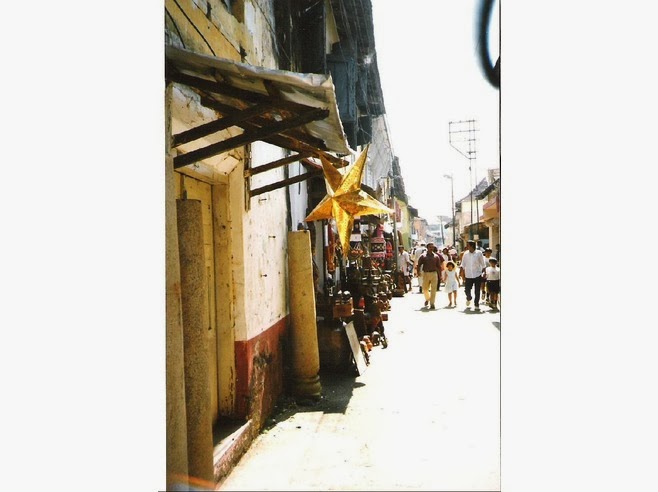
Travelling north from
Shenoy’s cinema, one entered a small junction which hosted a famous tailoring
shop, Byblos, owned by Antony, Antho to his friends, a favorite place for most
of the youngsters, particularly girls. Antho started his career in Bahrain and
returned to Kochi in the seventies to work in his brother’s tailoring shop,
Thara Tailors, where he paraded his couture skills, first on himself and later
on his young customers whose number grew by the day. Later, gathering a small
capital together, Antho started his first own venture, Fila Tailors, near
Kacheripady. The ambitious young man soon moved his business to a larger place,
renamed his business as Byblos and opened a branch in Palarivattom, bringing in
a partner to his business. The first setback of his career was waiting for
him there. A few unintelligent business decisions and a break up with his
partner saw the man in heavy debt, forcing him to move to Al Ain in the U.A.E.,
looking for greener pastures and ways to pay off the debts that seemed to pile
up with time.
A few years of hard
work in Al Ain and his innate enterprise helped him to save enough money to
clear the debts. Antony, the ever smiling handsome dude, is now happy managing
his new fashion business, a few steps away from his old shop, Byblos.
In 1947, as India was
gathering itself to embrace freedom from colonial rule, a young man was
planning his future. He opened a small textile shop in Cloth Bazar Road,
specialising in silk sarees. The shop was so small that there were no pieces of
furniture, the sales girls sat on floor mats and the buyers stood on the
pavement selecting the goods of their choice. Exclusivity of their stocks and
the smiling countenance of the owner attracted the upper class women by hoards
to the store and business soared. Jayalakshmi Silks, the textile major with
many huge outlets all over Kerala, had its humble beginnings at that narrow
selling space.

Years have transformed
Kochi into an aspiring metropolitan city but denuded it of the grace it once
had. The frenetic pace of professed progress has made life complex and
difficult. The trees that hovered as a canopy over the wild celebrations of a
Santhosh Trophy victory have been shaved off to accommodate the metro rail
project, wiping off the memories of a generation along with it. The massive escalation in the number
of buildings, a lot more than the frail roads could handle, has clogged the
city’s arteries. The stench of excrement at Kaloor junction is now replaced
with the disgusting odour of gasoline, a pollutant of higher order. The open lands
where boys played games of varied sorts have disappeared, ugly structures have taken
roots in their places. The omnipresence of garbage, but, remains.
We have lost the Kochi
of Antony and Lawrence and Anil Kumar the way we lost the multiplication tables
to the calculating machines, the way the fragrance of the flowers leaves the man whose
nose has been put under the surgical knife; Kochi has been shorn of its purity.
Life is not pure or simple any longer.
Saturday, February 8, 2014
Remebering Kochi - Part Three

Kochi of the sixties
permitted no beginnings, no ends.
Sir Albion Rajkumar
Banerji’s life was eventful. Born in the U.K. to Bengali parents, he did his
undergraduate studies in Calcutta, secured his Master’s degree from Oxford,
served as Diwan in Kochi and Mysore and as Prime Minister in Kashmir and precipitated a fight with the King of Kashmir to resign the post on moral
grounds. However, Banerji Road, unlike the civil servant whose name it
borrowed, did not boast of any credentials except that it was the gateway to the
city and offered little competition to the more glamorous Shanmugham Road and
M.G. Road. The road started from nowhere but stretched to end precisely
touching Shanmugham Road.
On September 1st,
1886, a grandson was born to the Maharajah of Palakkadu. The little boy grew to
become one of the most revered idealists Kerala had ever given birth to. K.P.
Kesava Menon, a freedom fighter and Indian National Congress leader, gathered a
few of his likeminded friends and, in the year 1922, started a daily in
Kozhikode. Mathrubhumi, over the years developed into a reliable Malayalam
daily, preferred by the intellectuals. In 1962, the Kochi edition was started
which was a revolution in the history of Malayalam dailies. With the new
edition, Mathrubhumi overtook Malayala Manorama as the most popular daily in
Kerala, though the status remained only for a short time.

Kochi edition of
Mathrubhumi was located in Kaloor, a few meters east to the junction. This was
the first building of noticeable size as one entered Kochi from the north. It
housed a state of the art printing press and the offices of the Daily. M.T.
Vasudevan Nair, the Jnanpith award winner, was a regular caller to this office
during his stint as the Managing Editor of Mathrubhumi Azhchapathippu (weekly).
One evening, on my way back from Sahrudaya Library which was a few blocks away,
I saw an inebriated V.K.N., the patriarch of Malayalam comedy, scolding the
invisible enemies assembled all around him, trying their mite to subdue him
for reasons known to none.
On March 2007, a death
occurred at a private hospital in Thrissur. The man was 92 when he succumbed to
heart ailments that had troubled him for a while. Gloom fell on many business
houses all over India for the man who passed away was their founder, who started
his business in 1939, opening a miserable laundry shop with a capital of Rs.
150. Compensating his lack of education with a shrewd business sense, the 24
year old young man slowly started building his empire, brick by brick, shop by
shop. When Kuttukkaran Porinchu Paul died, the business group was valued in
hundreds of crores with interests in automobiles, spares, tools, hardware and
many more and the name Popular carried tremendous good will. Popular
Automobiles, his shop selling automobile spares was the first such enterprise
in Ernakulam.
The shop, standing
where Market Road met Banerji Road, was a large retail outlet, covering the
entire ground floor of a building. People from all over the State visited the
shop for their auto spare needs. In the seventies, Popular consolidated their
presence in Ernakulam with a second shop, Popular Mill Stores, a walk away from
the District Town Hall, with scores of staff moving like bees inside. One of
the bees was a girl from Melur. She, over a course of time, fell for the charms
of an emaciated young man and married him. Her name was Shobha. The young man
had not yet established his notable literary and film career which, later, fetched him the
National Film Award for best screenplay and several State Television Awards, besides other literary awards.
P.F. Mathews was an upstart journalist then.

A squint-eyed young
man, with a few books tucked under his armpit, once roamed the corridors, the library
and the canteen of St. Albert’s College. He was a pleasing presence, always
ready to share a few thoughts with anyone he met on his path. Like George
Eden before him, he was a popular student, with many friends and very few
enemies. Simon Britto, after his graduate studies, joined Law College where he
continued his political work. On a depressing evening, he heard the news of a street
fight near Maharaja’s College and rushed to the scene. A peace loving man he
was, he intervened to stop the fight when the sharp knife of one the youths
pierced his lumbar spine. With a lower body that refuses to listen to his
wishes, Britto is still active in politics.
Punnakkal Narayana
Menon was a regular commuter through Banerji Road, on his way to Cochin Port
Trust where he worked as the Deputy Secretary. On one of his regular bus trips,
his heart failed him. The dead man arrived at the destination and refused to
alight from the bus to the bewilderment of his fellow passengers. Rajasekhara Menon, the youngest son of Narayana Menon, was
my close friend and classmate in St. Albert’s College. He dreamt of becoming a
writer, strayed from the path somewhere in between and is now, aping his
father, a Deputy Secretary at Advocate General’s Office in Ernakulam.
Kaloor was not Kaloor
at that time; it was more known as “the Land of Excrements”. Hundreds of
Municipality labourers, every morning, collected human waste from the
innumerable homes in the city to dump them into a garbage land located behind
Kaloor bus stand. The unbearable stench from the dump yard enveloped the small
ramshackle shed that was the bus stand, sticking to its floor, pillars and the leaking asbestos
roof. Still, people braved the stench for hours at the bus stand waiting for
the buses that rarely turned up at the appointed hours.
The road that went
southward from Kaloor led to Kathrikkadavu. The junction hosted a few shops,
and was a regular meeting place for the local inhabitants. Masdoor Café, a
modest tea shop with tile roofing, stood right at the corner with its name
painted on an asbestos sheet, placed on the edge of the slanting roof. One day,
Alex, a local youth, jumped 7 feet and smashed the board, following a bet with
the owner of the shop.
Alex, the merchant navy
sailor who spent months on vacation every year, was a hero of the locality. He
would enthrall the young boys with his acrobatic skills by clipping with his foot, a ball held
high over his head by Vavachan, the tallest man in the neighbourhood. People would
wait for the return of Alex from one of his voyages anticipating the fun and
the promised brawls. On a silent Saturday, Alex and his friends visited Mayfair
bar, standing close to St. Albert's College, where he had a run in with a burly dark man. As expected, the man stood no
chance against the athletic dexterity of the sailor and was beaten thoroughly.
With no physical answer to offer, Minnal revealed he was the Sub Inspector at the local police
station and threatened to take the sailor out soon. It dawned on Alex that a
tussle with the police always ended in misery and he ran away the same day to
join his fellow sailors in Mumbai.
Months went by when a
policeman, on duty at St. Antony’s Church on Banerji Road, identified Alex as
he was travelling on a bicycle and immediately informed the police station. A few weeks
later, Alex died at the General Hospital, succumbing to the injuries sustained
during the inhuman treatment meted out to him at the police station where his
fabled physical strength, for once, betrayed him.
Dr. C.V. George was
the first physician from Latin Catholic community and the first skin specialist
in Kerala. After completing his studies from Madras Medical College, he joined
the services of Maharaja of Kochi as Palace Doctor, de facto the health Minister, where he established the first leprosy
foundation in the State. Midway from Kaloor and Kathrikkadavu, one would find a
small lane which was named after the amiable healer. Every morning, a frail
looking small boy would reluctantly pass this road on his way to the church, a
dictate from his father he could not afford to disobey. During the regular
morning journeys, the boy would dream a thousand stories where evil battled unfortunate
men and always won. Njayarazhcha Mazha Peyyukayayirunnu (It was raining on
Sunday), his first anthology, presented some of his old dreams which came out more
powerfully in his first novel, Chaavunilam (The Land of the Dead). After many stories
and awards, P.F. Mathews still wears the cloak of the beadle in his dreams and
fights a losing battle against the demons.

St. Albert’s High School looked
over the college from the other side of the road. Two large Gothic structures of
the School concealed a playground and numerous small buildings from Banerji
Road. One of those small buildings accommodated a few priests; a dark complexioned
cleric, Fr. Augustine Konnully, the first person to get a doctoral degree in Mathematics from the University of Kerala and the fourth Principal of St. Albert’s College
lived there.
In the early sixties,
a young lawyer, getting sick of the world of crime, deserted his career as a lawyer in Mumbai,
returned home and joined the school as English teacher. His habitual references
to his life in Mumbai earned him the nickname, Bombay wallah but his
encyclopedic knowledge of the language and novel methods of teaching endeared
him to his students. Later, he taught the language at the Teacher’s Training
College and conducted several training courses for English language teachers
all over Kerala. He instilled the love of English language in me. T.P. Antony, a
reluctant lawyer and an enthusiastic teacher, is my father.
Every day, thousands
of visitors entered the city through Banerji Road and the city sold them dreams
in abundance. A few of the visitors lost their bearings along the way, lured by the magnetic
wiles of the city.
Still, life was
pure and simple.
Subscribe to:
Posts (Atom)